July 07 : 2025
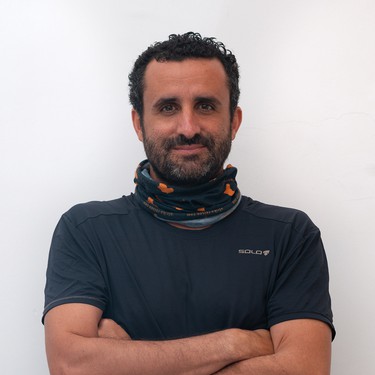
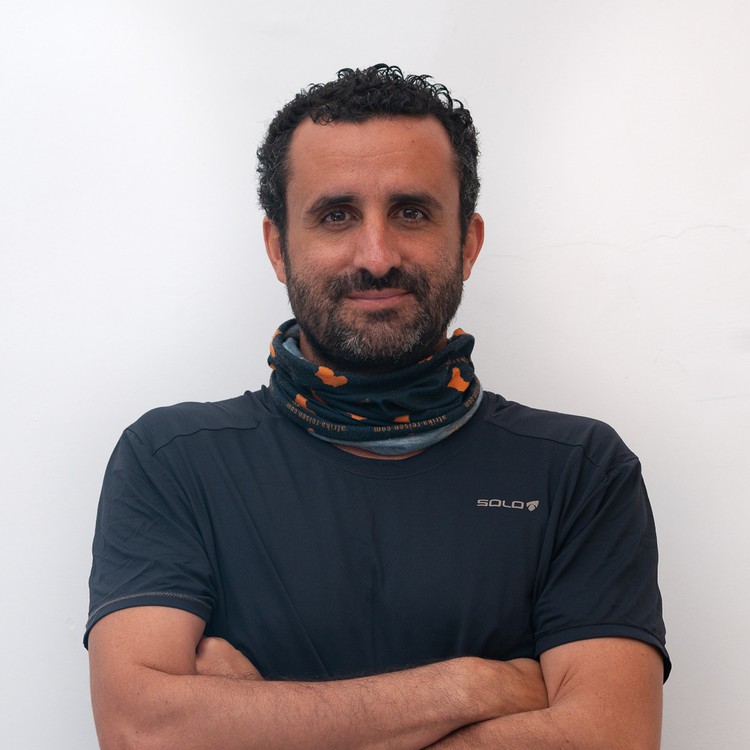
Octavio Campos Salles
Salles's winning image exemplifies the magic of an aerial perspective. This capture invites a closer look- what at first seems to be a composition of terrestrial forms gradually reveals itself to be something unexpected.
by Lily Fierman

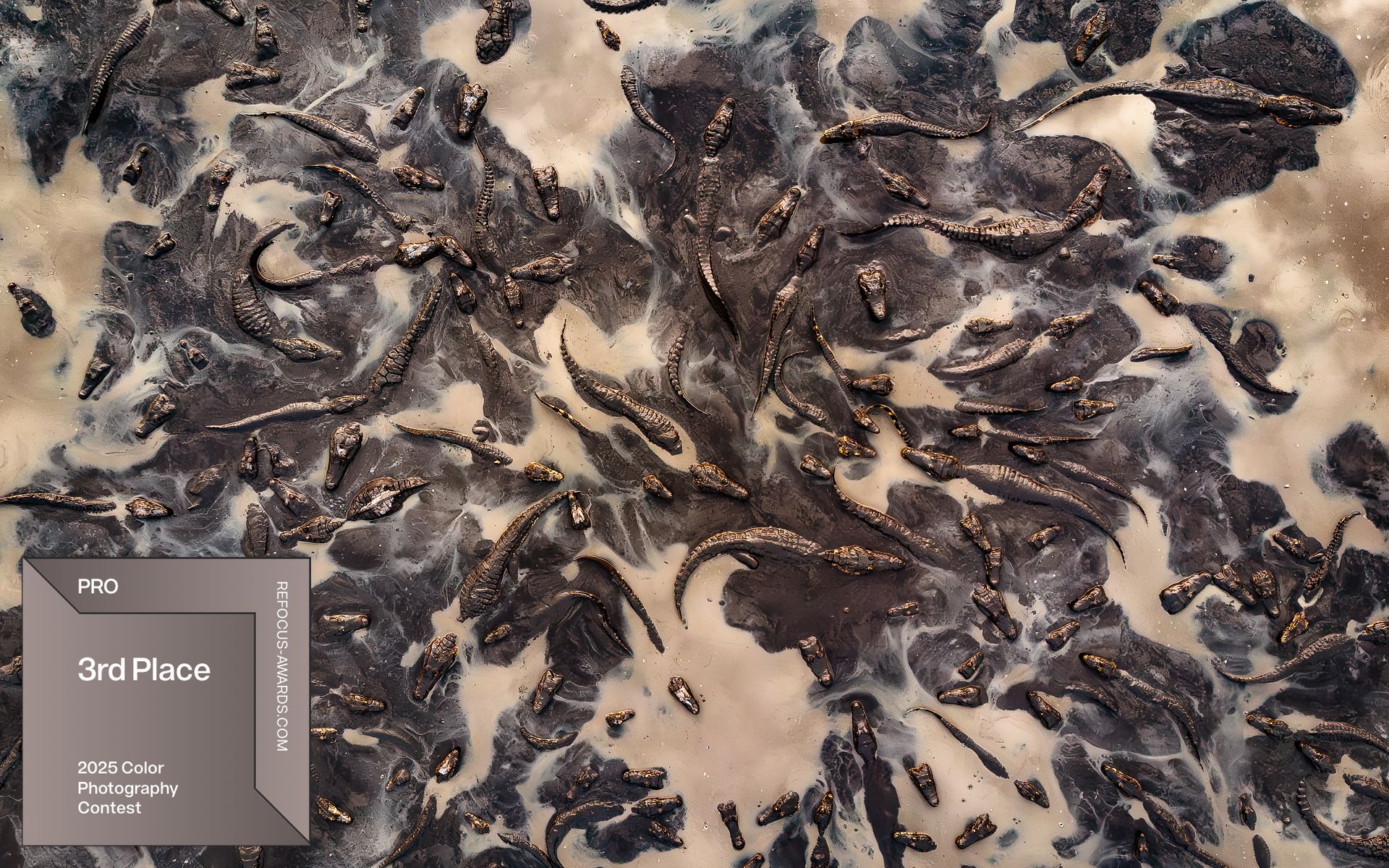
Image: Where Water Once Was
Q:
Can you please tell us more about creating your winning image, “Where Water Once Was”?
A:
That image was captured during the most intense dry seasons I’ve ever witnessed in the North Pantanal, Brazil. Normally, this vast wetland is a mosaic of water channels, flooded plains, and marshes teeming with life. But during that season, the water vanished almost entirely from areas that are usually submerged—altering the ecosystem dramatically and impacting countless species, especially the caimans. Despite being one of the most numerous reptiles in the Pantanal, these caimans were facing an existential crisis. As their habitat dried up, thousands became stranded while searching for water under the relentless tropical sun. The group pictured in the photo had once been spread out across a sprawling wetland covering several square kilometers. Now, they were forced to cluster in the shrinking remnants of a mud pool—one of the last depressions holding any moisture.
I knew from prior visits that this dramatic transformation was likely unfolding, so I returned specifically with a drone. Photographing from ground level wouldn’t have done justice to the sheer scale and urgency of the scene. From above, the image reveals the haunting, almost abstract patterns formed by the caimans’ bodies and the drying mud—an aerial tapestry of survival, desperation, and resilience. It’s a moment that encapsulates both the raw beauty and fragility of the Pantanal in a changing climate.
I’ve been working in this region for over two decades, and that time on the ground has given me a deep understanding of the Pantanal’s complex ecosystems, seasonal rhythms, and the intricate relationships between its wildlife.
Q:
This image has an optical illusion effect; you don’t truly get its full impact until you looke closely. Can you tell us more about how you arrived at this vantage point?
A:
The photo was captured using a drone, with the camera aimed straight down to emphasize the graphic quality of the scene. From that vantage point, the chaotic textures and swirling forms created by the caimans and the drying mud take on an almost abstract quality. That was precisely the effect I was aiming for—transforming a moment of harsh environmental reality into something that invites closer inspection. At first glance, viewers might see an abstract pattern or even a painting, but as they look more closely, the details begin to emerge, revealing the powerful story behind the image.
Q:
You specialize in certain areas, which means you get to spend countless hours getting to know the landscape and animals. How do you think this proximity and intimacy with your subjects has helped shape your photography?
A:
Yes, I specialize in wildlife photography, and the Pantanal has long been at the heart of my work—both artistically and professionally. In fact, it’s not only my main photographic focus but also the namesake of my photo tour company. I’ve been working in this region for over two decades, and that time on the ground has given me a deep understanding of the Pantanal’s complex ecosystems, seasonal rhythms, and the intricate relationships between its wildlife. This long-term experience has allowed me to develop a versatile photographic approach—one that moves beyond simple documentation to explore the nuances, interactions, and emotional weight of life in this remarkable biome.
In wildlife photography, it can be challenging to move beyond a purely documentational style. We're often working with long lenses, which naturally limit our perspective and compress the scene—making it harder to incorporate broader compositional or artistic elements. As a result, the focus tends to be on capturing interesting behaviors or rare moments, while things like visual storytelling, abstraction, or creative composition often take a back seat. That’s why I find it especially rewarding when I can break out of that constraint and explore a scene from a different angle—literally and creatively. Aerial photography, for instance, opens up new possibilities to blend behavior, context, and visual artistry in a single frame - and this is specially rewarding with wildlife photography, in my opinion.
Q:
Why color photography over black and white?
A:
That’s a great question. This particular image is actually a strong candidate for black and white—I’ve seriously considered that option and even created a few monochrome versions. Black and white tends to enhance the tactile quality of texture-heavy, pattern-rich scenes like this one. However, I ultimately chose to present it in color. The reason is that the image is already very muted in tone—almost monochromatic—so the final result in color doesn’t differ dramatically from a black-and-white version. Keeping it in color preserves the subtle earthy tones and natural context, while still delivering that graphic, almost abstract impact I was looking for. I also opted for color because it captures the smoky sky tones that are so characteristic of the dry season, adding an extra layer of atmosphere and a sense of place.
Q:
What are you working on next?
A:
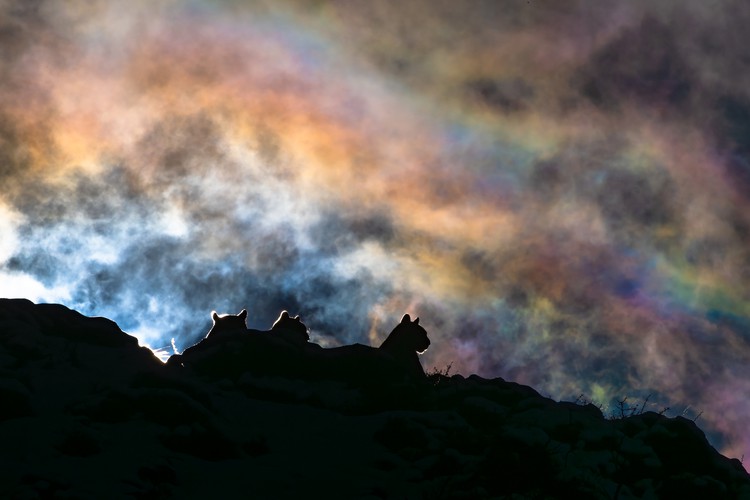
I travel extensively throughout the year in pursuit of wildlife stories. In fact, I’ve just returned from 45 days in the icy landscapes of Chilean Patagonia, where I was photographing pumas in their rugged habitat. Now we’re entering the Pantanal season, and, fortunately, the water levels have finally returned to normal—a huge relief after four consecutive years of severe drought.
While I don’t have a single, defined project at the moment, I’m always striving to explore new and creative approaches to wildlife and nature photography. Later this year, I plan to venture into some remote regions of the Amazon, where I’ll be focusing more closely on isolated indigenous tribes and their relationships with the surrounding fauna. It’s a different kind of story—one that blends culture, ecology, and visual storytelling.
Q:
Who are some of the photographers you admire?
A:
My approach to nature and wildlife photography is quite diverse—I work across a wide range of styles, from traditional telephoto work to aerial and even underwater imagery. Because of that variety, I’ve drawn inspiration from many different photographers over the years. To name just a few who have left a lasting impact on me: Paul Nicklen, Michael Nichols, Tim Laman, Sebastião Salgado, etc.
ARTIST